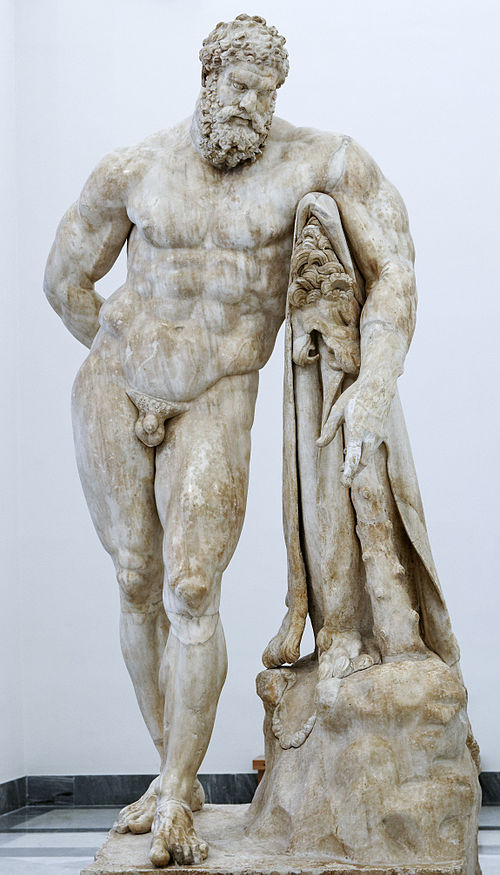
Achilles / Achilles
Greatest Greek hero of the Trojan War
Achilles was the mightiest warrior of the Greek army at Troy, the hero of Homer's Iliad and the most famous fighter in all of Greek mythology. His rage, his grief, and his single weak spot — his heel — made him both superhuman and deeply human.

How they were born
Achilles was the son of Peleus, king of Phthia, and the sea nymph Thetis. A prophecy said Thetis would bear a son greater than his father, so the gods married her off to a mortal man to keep that son from threatening Zeus. In the later tradition, Thetis tried to make her baby immortal by dipping him in the River Styx, holding him by the heel — the one spot the water never touched. As a boy he was sent to the wise centaur Chiron, who raised him on Mount Pelion and taught him hunting, music, and war.
The greatest stories
The Wrath of Achilles
In the tenth year of the Trojan War, the Greek commander Agamemnon seized Achilles' prize, the captive woman Briseis, and Achilles' pride could not bear it. He withdrew from the fighting, and without him the Greeks began to lose badly, pushed back to their ships by the Trojan prince Hector. His closest friend Patroclus begged to borrow Achilles' armor and lead the Myrmidons into battle, and Achilles agreed — but Hector killed Patroclus and stripped the armor from his body. Mad with grief, Achilles returned to the war, received new armor made by Hephaestus, and killed Hector in single combat, dragging his body behind his chariot. In the end, pity won out over rage: when old King Priam came in secret to beg for his son's body, Achilles wept with him and returned Hector for burial.
The Choice of Achilles
Before he ever sailed for Troy, Achilles knew his fate. A prophecy gave him two lives to choose from: a long, quiet life at home with no glory, or a short life of fame that would never be forgotten. He chose glory. His mother Thetis tried everything to keep him from the war — she even hid him on the island of Scyros, dressed as a girl among the daughters of King Lycomedes. But Odysseus found him by laying out gifts of jewelry and weapons; Achilles reached for the sword, and the trick was over. He sailed to Troy knowing he would never come home, and that is what makes him a hero rather than just a strong man.
Achilles and Patroclus
Patroclus was Achilles' dearest companion since childhood — they had grown up together in the halls of Peleus and trained side by side under Chiron. In the Iliad they are inseparable, sharing a tent, meals, and every decision of the war. When Patroclus was wounded, Achilles himself bound the wound, a scene painted on a famous cup from about 500 BC. Their bond is the emotional heart of the Iliad: it is Patroclus' death, not any insult to Achilles himself, that finally drives him back into battle. When Achilles died, his ashes were mixed with Patroclus' in a single golden urn, so the two would not be parted even in death.
The Death of Achilles
Achilles could not be beaten in fair combat, so Troy's fall required a different kind of killing. After Hector's death, Achilles went on to kill the Ethiopian king Memnon and the Amazon queen Penthesilea, but his end was near. Paris, the Trojan prince whose theft of Helen had started the war, shot an arrow at him — and the god Apollo, who favored Troy, guided it to the one vulnerable place on his body: the heel his mother had held when she dipped him in the Styx. The greatest warrior of the Greeks fell to an arrow in the heel, and the Greeks burned his body with great honors. His armor was awarded to Odysseus, and the hero Ajax, who believed it should have been his, took his own life in shame.
Achilles and the Embassy
While Achilles sat out the war in his tent, the Greeks grew desperate and sent an embassy to beg him back: Odysseus, Ajax, and the old counselor Phoenix, who had helped raise him. They offered him rich gifts — gold, horses, cities, and Agamemnon's own daughter in marriage — if only he would fight again. Achilles listened, and then refused them all, saying that no pile of treasure was worth his life and that Agamemnon had insulted him too deeply to forgive. It is one of the most famous scenes in the Iliad, because it shows Achilles as more than a weapon: a man who weighs honor, friendship, and his own short life, and will not be bought.
Family & connections
Symbol, animal & weapon
Fun facts
- The story of the River Styx and the vulnerable heel does not appear in Homer's Iliad at all — it first shows up centuries later, in the Roman poet Statius' unfinished epic, the Achilleid.
- The tendon at the back of the human ankle is called the Achilles tendon after him, and the phrase 'Achilles' heel' now means anyone's one weak spot.
- His immortal horses, Xanthus and Balius, were gifts from the sea god Poseidon — and Xanthus once spoke to warn Achilles that he would soon die.
- The Achilles statue at Hyde Park Corner in London, put up in 1822 to honor the Duke of Wellington, was cast from French cannon captured in the Napoleonic Wars.
Gallery — sculpture & art